Smarter Label Application: Reducing Hidden Inefficiencies on the Line
Label applicators often operate quietly in the background of a packaging line, but their performance can have a direct effect on throughput, product presentation and overall efficiency. Small issues—such as a misapplied label, an adjustment during a changeover or instability in the label web—may appear insignificant on their own. Repeated throughout a production run, however, they can add up to lost time, material waste and extra operator effort.
Why Labeling Efficiency Matters
Accurate label placement supports both product presentation and operational requirements. Labels may contain barcodes, 2D codes, product information or regulatory details, so poor positioning can create more than a cosmetic problem.
Consistent application also helps maintain brand quality. When labels move, wrinkle or land outside the expected position, the finished product may appear inconsistent even when the packaging itself is otherwise correct.
Where Hidden Inefficiencies Come From
Many labeling interruptions are the result of several small variables rather than one major equipment failure. Traditional systems may depend on multiple sensors, tensioning arrangements and mechanical contact points to guide the label web.
Over time, these components can introduce variation. Operators may need to make adjustments to compensate for changes in web tension, product format or machine setup. Typical symptoms include missed labels, small placement shifts, misfeeds and occasional web breaks.
Reducing Manual Setup and Adjustment
A major direction in modern label applicator design is to automate functions that previously required operator intervention. Automatic label detection can reduce manual sensor setup, while controlled web handling can help maintain stable tension during the run.
Simplifying the label path can also make loading and changeovers easier to understand. When the process is more repeatable, different operators are less likely to achieve different results.
Why Label Web Handling Affects Uptime
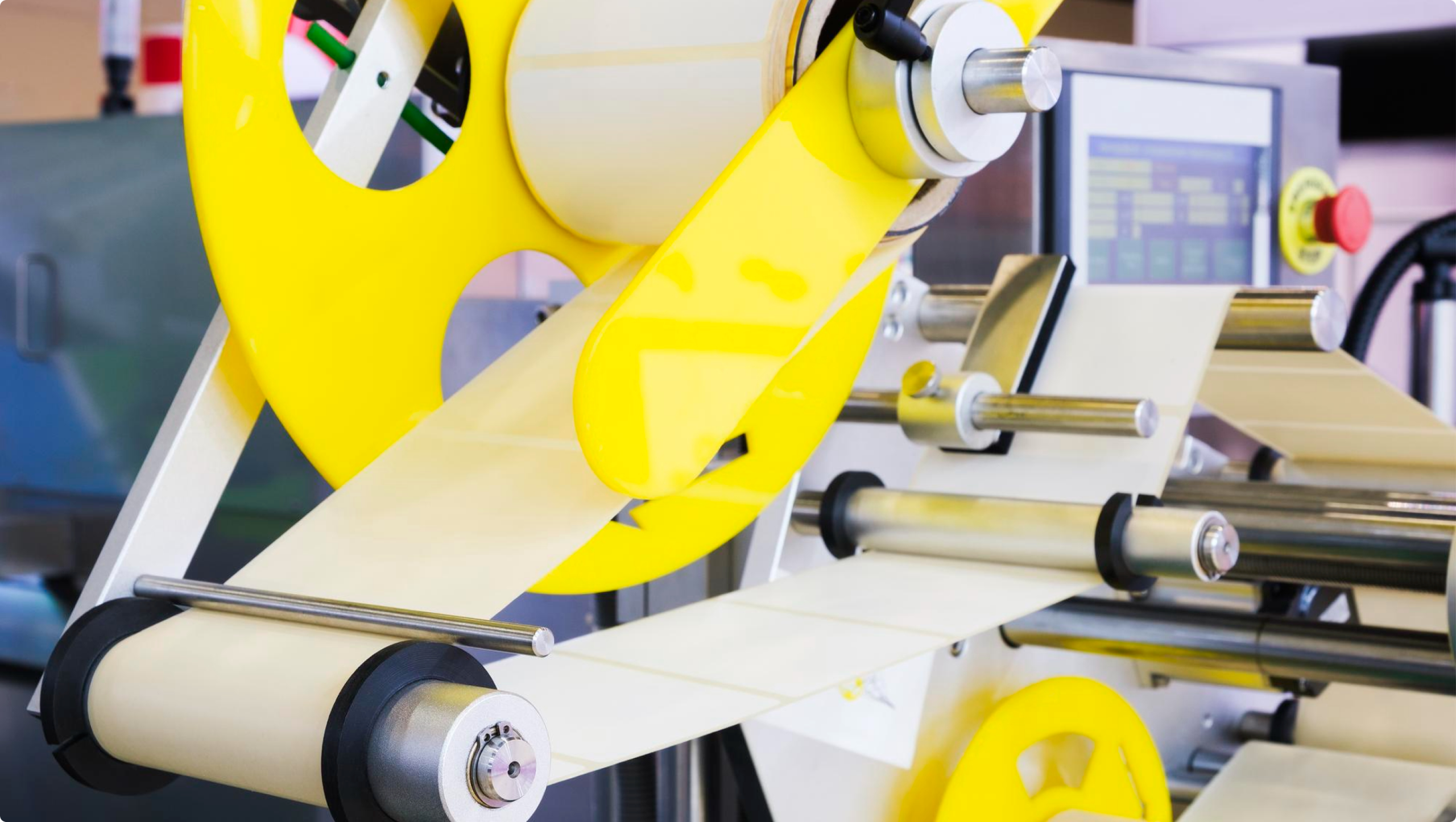
The label web is a critical part of the application process. Unstable tension or unnecessary mechanical contact can contribute to breaks, jams and inconsistent label positioning.
A more controlled system aims to keep web behaviour stable throughout the reel, including as the amount of remaining material changes. Reducing unnecessary contact points can also lower the number of areas where wear or friction may introduce problems.
Better web control means fewer mid-run adjustments and a smoother production process, particularly when lines operate at high speed.
Placement Accuracy and Downstream Quality
Label position can affect scanning, inspection and overall package quality. Even a small shift may make a barcode or 2D symbol harder to read or cause a product to fail a visual quality check.
Modern applicators can improve repeatability through more consistent label detection, stable positioning before application and reliable performance at production speed. The objective is to maintain accuracy without requiring the line to slow down.
Flexibility for Changing Production Needs
Manufacturing environments change frequently. Different SKUs may require different label dimensions, product formats or production rates. A labeling system that can accommodate these changes with limited adjustment can reduce the need for workarounds or additional equipment.
Flexibility is particularly valuable during changeovers. Faster, more predictable setup helps manufacturers maintain throughput while supporting a wider range of products.
What Simplified Applicator Design Looks Like
Simplification is not about removing useful functionality. It is about reducing unnecessary sources of variation and making the essential process easier to manage.
Practical design features may include an accessible label web path, fewer mechanical adjustment points and diagnostics that help operators identify problems quickly. The result is a system that is easier to load, troubleshoot and maintain.
Example: A Modern Approach to Label Application
The Videojet 9310 is an example of a label applicator designed around simplified web handling and controlled label movement. Its Intelligent Motion technology is intended to maintain consistent web control across the reel, helping reduce variation caused by changing tension conditions.
The system also reduces reliance on several traditional mechanical components, including nip rollers, clutches and friction brakes. Fewer mechanical interfaces can mean fewer potential wear points and less routine adjustment.
The important lesson is broader than one machine: a simpler mechanical architecture can help make labeling more repeatable, reduce operator intervention and support stable long-term performance.
Key Takeaways
- Labeling performance affects more than appearance—it can influence uptime, scanning, quality control and operator workload.
- Frequent manual adjustments and unstable web handling are common sources of avoidable inefficiency.
- Automated detection, controlled web tension and simplified mechanical design can make labeling more predictable.
- Before selecting an applicator, evaluate the complete process, including changeovers, label formats, line speed, maintenance and operator requirements.